Understanding Cross Country Moving with National Van Lines
These moves typically involves transporting your belongings across state lines. These relocations require more preparation than shorter moves due to logistics, regulations, and distance traveled. Learn more about long distance moves.
You’ll generally choose between:
DIY Move
Renting a truck or container and handling all packing, loading, and transport yourself.
This may save money but is labor-intensive.
Professional Long-Distance Movers (Recommended)
National Van Lines manages everything—from packing and loading to transportation, delivery, and even unpacking services. As an FMCSA-licensed and insured interstate carrier, National Van Lines helps keep your belongings safe every step of the way.
Key Early Steps
- Start planning 8–12 weeks in advance.
- Inventory your belongings to determine what stays and what goes.
- Gather packing materials early.
- Decide whether to pack yourself or opt for professional packing services.
Essential Packing Tips
- Pack essentials separately for your first few days.
- Label every box clearly.
- Create a packing schedule by room or category.
Creating an Effective Cross-Country Moving Timeline
A structured timeline keeps your move on track. Here’s how to build one that supports a smooth,
stress-free long-distance relocation.
Start Planning at Least 2 Months Ahead
This gives you time to compare quotes, gather supplies, and secure your preferred moving dates—
especially during peak seasons.
Use a Customized National Van Lines Moving Checklist
Located below is a moving checklist. Print your checklist, save a digital version, or store it in a notes app for easy reference throughout your move.
Build a Packing Schedule
Assign rooms to specific days or weeks, and always pack essentials last so they remain easily accessible.
Break Tasks into Stages
- 8 Weeks Before: Research movers, create a moving binder, start decluttering.
- 6 Weeks Before: Order packing supplies, begin packing decor & seasonal items.
- 4 Weeks Before: Confirm travel plans, notify schools & service providers.
- 2 Weeks Before: Pack non-essentials, finalize utility transfers.
- 1 Week Before: Pack essentials, confirm details with National Van Lines.
A clear timeline helps eliminate overwhelm and keeps you in control at every stage of your move.
How to Choose the Right Long-Distance Mover (Why National Van Lines Stands Out)
Your mover becomes your partner—entrusted with everything you own. Here’s how to hire the right movers for the job:
- Ask friends and family for referrals.
- Compare written estimates from at least 2–3 moving companies.
- Verify USDOT licensing through the FMCSA.
- Read customer reviews and Better Business Bureau ratings.
- Request a detailed written contract outlining services, dates, and all associated costs.
National Van Lines offers free virtual or in-home estimates, transparent pricing, and a dedicated relocation specialist to guide you from start to finish.
Budgeting for Your Long-Distance Move
A moving budget helps you understand costs and avoid surprises during your long-distance move.
Be sure to include:
- Packing supplies and moving boxes.
- Professional moving services.
- Travel expenses (fuel, flights, lodging, meals).
- Emergency funds for unexpected costs.
- Vehicle transport, if needed.
- Short– or long-term storage solutions.
- Moving coverage or valuation protection.
Average long-distance moves range from $3,000–$5,000, depending on distance, load size, and service level. National Van Lines provides customized quotes to fit your budget and needs.
Packing Materials & Strategies for Long-Distance Success
Using the right materials protects your belongings over hundreds or thousands of miles. Gather:
- Small, medium, and large moving boxes.
- Packing tape and a tape dispenser.
- Bubble wrap and packing paper.
- Moving blankets and furniture pads.
- Mattress covers and plastic furniture covers.
- Heavy-duty trash bags and resealable plastic bags.
- Dollies or hand trucks.
- Basic toolkit and scissors.
Consider organizing your packing with a moving binder to store your packing list, inventory, and essential documents.
Packing Best Practices
-
- Declutter before you start to reduce what you transport.
- Use small boxes for heavy items and larger boxes for lighter items.
- Fill empty spaces with packing paper or cushioning to prevent shifting.
- Wrap fragile items individually with bubble wrap or packing paper.
- Label each box with contents and destination room.
- Use furniture pads or moving blankets to protect furniture and appliances.
- Secure moving parts on appliances and wrap surfaces to prevent scratches.
- Keep refrigerated or perishable items in coolers for travel day.
Decluttering Before You Move
Decluttering reduces stress, moving costs, and time spent packing and unpacking. A thoughtful declutter can also help your home show better if you’re selling.
Work room by room and sort items into four categories:
- Keep: Items you use frequently or that hold strong sentimental value.
- Sell: Items in good condition that still have value.
- Donate: Gently used items others can benefit from.
- Discard: Broken, damaged, or unusable items.
Host a garage sale or sell online to generate extra cash. Donate items to local charities or thrift stores and request a donation receipt for your records when applicable.
Organizing Your Belongings
One of the most important steps in preparing for an interstate move is organizing your belongings before packing.
Before you begin:
- Create an inventory list of your major items and box contents.
- Consider using a numbering or color-coding system for boxes.
- Group similar items together whenever possible.
- Wrap and cushion fragile items thoroughly.
An organized system simplifies unpacking and provides helpful documentation for insurance purposes if anything is damaged in transit.
Moving Day Checklist
Moving day is the big moment. Use this checklist so you don’t miss any critical steps:
- Wake up early and give yourself extra time.
- Review your moving binder or digital checklist.
- Prepare large furniture by removing cushions and loose components.
- Pack perishables like food and plants separately.
- Ensure all boxes are clearly labeled with contents and destination rooms.
- Load heavier items and boxes first, then lighter ones on top.
- Walk through each room, closet, and cabinet one last time.
- Keep valuables, medications, important documents, and sentimental items with you—not in the truck.
- Confirm that utilities are shut off or transferred as planned.
With National Van Lines, your professional moving crew will be there to guide the process and ensure everything is handled with care.
Handling Special Items
Certain belongings require extra care during a long-distance move, including pets, plants, and delicate items.
Moving with Pets
- Obtain updated vaccination records and health certificates from your veterinarian.
- Decide whether to travel with your pet or use a pet transport service.
- Prepare a pet travel kit with food, water, medications, waste bags, and a favorite toy or
blanket. - Set up a safe, quiet space for your pet as soon as you arrive in your new home.
Moving with Plants
We do not move plants, but here are ways to pack them up!
-
- Re-pot plants into lightweight plastic containers before moving.
- Prune or trim large plants to reduce breakage.
- Avoid overwatering right before transport; ensure pots are stable and placed in ventilated,
cushioned containers. - Label plant boxes as “Fragile” and “This Side Up” for gentle handling.
Updating Your Address & Important Records
Be sure to update your address and transfer critical records as part of your long-distance move.
Postal Address
Submit a change-of-address form online or at your local post office so the USPS can forward your mail for a set period.
Financial Institutions
Notify your bank, credit card companies, and other financial institutions of your new address to avoid billing issues or account alerts.
Medical Providers
Update your address with your primary care physician, specialists, dentists, and any other medical providers. Request copies or transfers of medical records to new providers.
School Records
Transfer transcripts and important documents from your child’s previous school to their new school to ensure a smooth enrollment process.
Bill of Lading
Your bill of lading is the legal contract between you and your moving company. Review it carefully to confirm services, costs, and terms, and keep a copy for your records.
Driver’s License or ID
Check your new state’s DMV requirements and update your driver’s license or state ID within the required timeframe.
Transferring Utilities & Services
Transferring utilities is a key part of a successful long-distance move. Follow these steps to stay on top of it:
Expert Cross Country Moving Services
If you’re preparing for a cross country relocation to a new state, speak with the moving professionals at National Van Lines. We offer a full-service moving experience that covers packing, loading, storage and transportation. To learn more, call 800-323-1962 or request a free moving quote today.
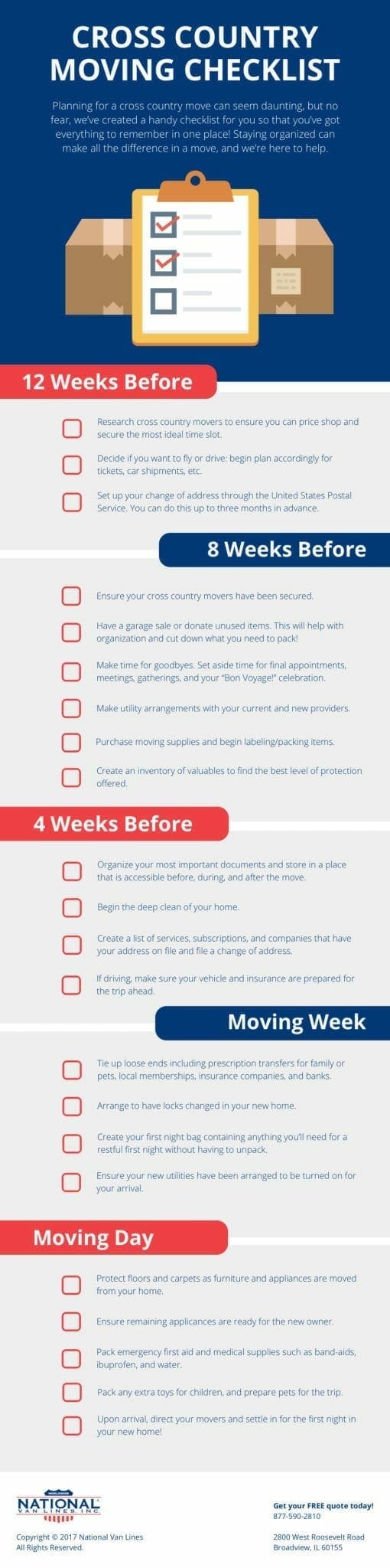
Share This Infographic On Your Site
Image Credit – Drazen Zigic/Shutterstock.com